
"It’s Good to Know early”: Cancer survivor Aunty Sharon Thorpe champions free lung cancer screening
For Aunty Sharon Thorpe, early detection isn't just a health message, it's personal.
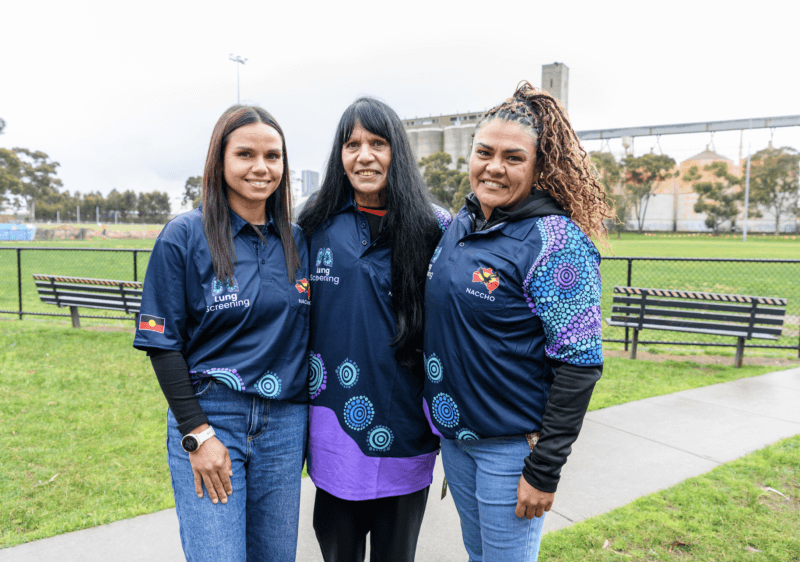
She has found cancer early twice. Now she wants mob to have the same chance.
A proud Yorta Yorta and Gunnai/Kurnai woman, mother of two and grandmother of four, Aunty Sharon has spent her life putting community first. She worked at the first Aboriginal Health Service in Fitzroy in 1978, and has worked across Victoria - Echuca, Gippsland, Dandenong, and eventually to the Victorian Aboriginal Community Controlled Health Organisation.
"I've always been health conscious," she says. "I've put our community's health first my whole working career."
Luckily, Aunty Sharon has always been proactive about her health. At 45, she noticed changes in her body and went straight to her doctor. The answer came back: bowel cancer. She beat it. Then, in 2020, in the middle of COVID, Aunty Sharon was diagnosed with breast cancer. She beat that, too.
Aunty Sharon smoked for many years before giving it up, which meant she was eligible for the new National Lung Cancer Screening Program. With her daughter's encouragement, she booked an appointment with her doctor to discuss lung cancer screening and get a referral for the low-dose CT scan.
"I did have nerves about what the results might show," she admits. But for Aunty Sharon, that was reason enough to go. "I'd rather know early than leave it too late."
Now she's sharing her story to encourage mob to do the same.
"I know firsthand how important early detection is. When cancer is found early, it gives people more treatment options and a better chance of success”.
"If this information had been around when our parents and Elders were growing up, maybe it could have kept them around a lot longer,” Aunty Sharon reflected.
Who can get a free lung screen?
Lung cancer screening uses a low-dose CT scan to take images of your chest to look for early signs of lung cancer. It’s quick, painless and easy to do. You may be eligible if you:
- are aged between 50 and 70 years old, and
- currently smoke tobacco cigarettes or have quit in the past 10 years, and
- don’t have any signs or symptoms of lung cancer (e.g. coughing up blood or chest pain), and
- have a smoking history of 30 pack-years or more (your health worker or doctor can help you determine this).
Aunty Sharon knows putting yourself first doesn't always come easy in community.
"A lot of our people are busy looking after everyone else," she says. "But your health matters, too."
Her message is simple: “It’s good to know because knowing gives us a stronger chance. Early detection can save your life. Looking after your health means sticking around longer for your kids, your grandkids, and your community.”
Have a yarn with your local AMS, doctor, or health worker to find out if you're eligible for free lung screening.
Because it's good to know.
- Stories
- First Nations